
Best Indian weight loss diet plan doesn’t mean giving up roti, rice, or your favorite homemade meals. The right approach focuses on balanced portions, enough protein, vegetables, and sustainable eating habits.
The standard advice on the internet for losing weight usually breaks down the moment it meets an Indian kitchen.
Western diet plans tell you to eat grilled salmon, asparagus, and quinoa bowls. Extreme Indian crash diets tell you to survive on cucumber slices, warm lemon water, and clear soup. Neither approach lasts beyond twelve days.
The truth is straightforward: you do not need to quit Indian food to lose fat. Traditional Indian cooking is rich in whole grains, legumes, vegetables, and gut-friendly spices. Where most Indian diets fail for fat loss comes down to two specific structural issues: disproportionately low protein and invisible cooking fats.
Fix those two variables while maintaining a moderate calorie deficit, and fat loss becomes predictable, sustainable, and culturally normal.
Why Most Indian Weight Loss Diets Fail
Before looking at meal plans, it helps to understand why your previous attempts likely stopped working.
1. The Carb-Dominant Macro Ratio: A standard home-cooked Indian thali often consists of 3 large rotis, a mound of rice, a small watery katori of dal, and sabzi fried in oil. This composition is roughly 75% carbohydrates, 15% fat, and under 10% protein. Protein is what triggers satiety hormones (leptin and peptide YY); without it, you are ravenously hungry two hours after eating.
2. The “Tadka” Trap: Mustard oil, desi ghee, and groundnut oil are healthy fats, but they are calorically dense (roughly 120 calories per tablespoon). Free-pouring oil into sabzis and gravies can quietly add 300 to 500 uncounted calories to a home-cooked lunch.
3. Crash Diet Rebounds: Cutting your intake to 1,000 calories drops scale weight fast—mostly water and lean muscle mass. Within a month, metabolic rate drops, cravings spike, and you regain the weight plus extra fat.
Core Rules for the Best Indian Weight Loss Diet Plan
To make the best Indian weight loss diet plan work long-term, follow four non-negotiable principles:
- Anchor Every Meal Around Protein: Aim for 20–35 grams of protein in breakfast, lunch, and dinner. For vegetarians, this means paneer, tofu, soya chunks, Greek yogurt/hung curd, and sprouted legumes. For non-vegetarians, it means eggs, chicken breast, and fish.
- Measure Your Cooking Oil: Stop free-pouring from the oil can. Use a standard measuring tablespoon. Cap your daily cooking oil to 2–3 tablespoons (20–30ml) across all meals.
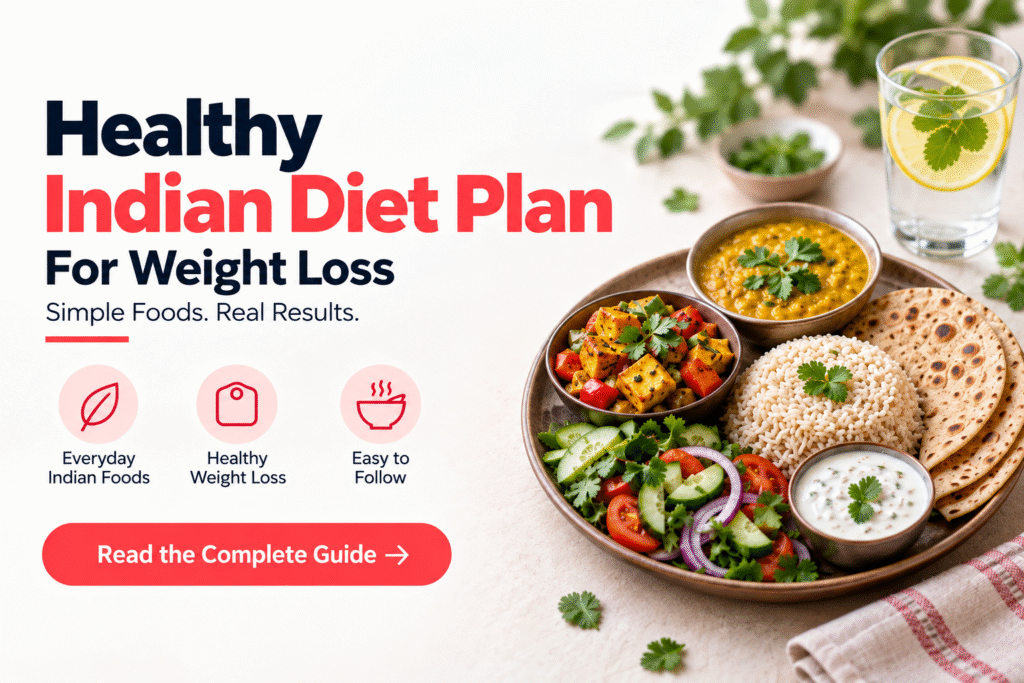
- The Plate Division Rule: Divide your plate visually:
- 50% of the plate: Fiber & micronutrients (salad, stir-fried vegetables, raw cucumber/tomatoes, sautéed greens).
- 25% of the plate: Protein source (paneer, soya, chicken, eggs, curd).
- 25% of the plate: Carbohydrate source (1–2 rotis, or 1 measured cup of cooked rice).
- Don’t Drink Your Calories: Cut out fruit juices, sweetened chai (cutting chai with 2 spoons of sugar twice a day is ~120 empty calories), soft drinks, and evening packaged snacks.
Sample 7-Day Indian Weight Loss Meal Plan (~1,500 – 1,600 Calories)
Note: Calorie needs depend on height, weight, gender, and daily movement. This best Indian weight loss diet plan provides a balanced ~1,500 calorie template with 80g–100g of protein.
Option A: Vegetarian Meal Template
| Meal | Food Items | Approx. Calories | Protein (g) |
| Early Morning (7:00 AM) | 1 glass warm water + 5 soaked almonds & 1 walnut | 65 kcal | 2g |
| Breakfast (8:30 AM) | 2 Paneer/Besan Chillas (stuffed with 50g low-fat paneer + veggies) + mint chutney | 340 kcal | 18g |
| Mid-Morning (11:30 AM) | 1 bowl of curd/Greek yogurt (150g) OR 1 medium fruit (Apple/Papaya) | 110 kcal | 8g |
| Lunch (1:30 PM) | 1 bowl green salad + 1 Phulka (dry) + 1 cup thick Dal + 100g Soya chunk sabzi | 460 kcal | 32g |
| Evening Snack (5:00 PM) | 1 cup Black Coffee / Chai (no sugar, dash of milk) + 30g Roasted Chana or Makhana | 130 kcal | 6g |
| Dinner (8:00 PM) | 1 cup cooked Rice (or 1 Phulka) + 150g Grilled Paneer/Tofu Tikka + 1 large bowl sautéed mixed vegetables | 430 kcal | 26g |
| Daily Total | — | ~1,535 kcal | ~92g |
Option B: Non-Vegetarian / Eggetarian Meal Template
| Meal | Food Items | Approx. Calories | Protein (g) |
| Early Morning (7:00 AM) | 1 glass warm water + 5 soaked almonds | 45 kcal | 1.5g |
| Breakfast (8:30 AM) | 3 Whole Eggs (Boiled or Omelette with 1 tsp oil) + 1 slice whole wheat toast + spinach/tomatoes | 320 kcal | 20g |
| Mid-Morning (11:30 AM) | 1 tender coconut water or 1 bowl sliced watermelon | 60 kcal | 1g |
| Lunch (1:30 PM) | 1 cup steamed Basmati rice + 150g Grilled / Curry Chicken Breast (light gravy) + Cucumber-tomato salad | 480 kcal | 38g |
| Evening Snack (5:00 PM) | Black Coffee/Tea (sugarless) + 2 Boiled Egg Whites or 25g roasted peanuts | 120 kcal | 8g |
| Dinner (8:00 PM) | 1 Phulka + 150g Fish Curry or Grilled Chicken + large katori sautéed Bhindi/Gobi | 450 kcal | 34g |
| Daily Total | — | ~1,475 kcal | ~102.5g |
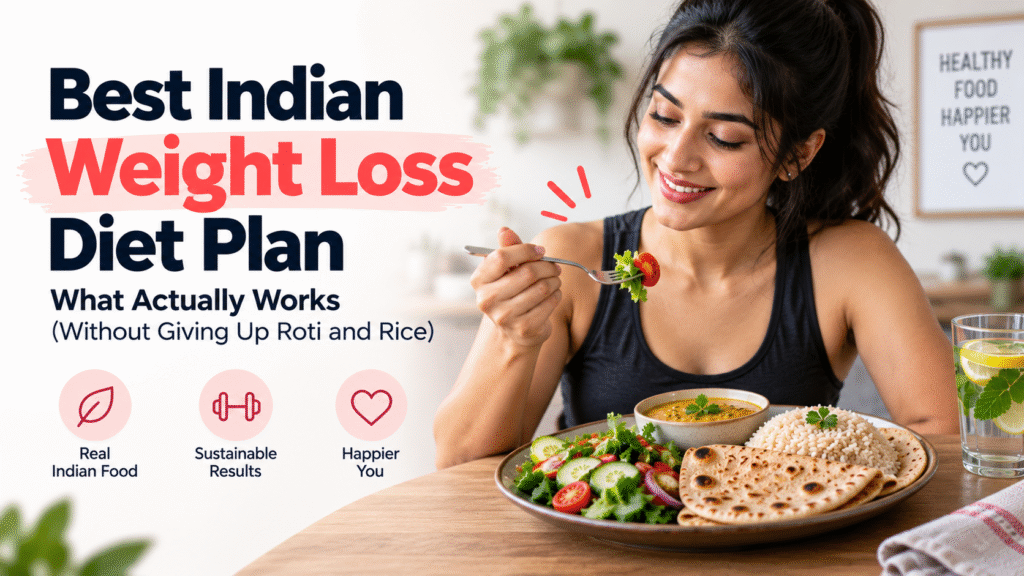
Best Indian Weight Loss Diet Plan: What Actually Works (Without Giving Up Roti and Rice)
Looking for an effective Indian weight loss diet plan? This guide explains how to lose fat without giving up roti, rice, or traditional home-cooked meals. Learn about protein, portion control, cooking oil, calorie deficits, sample Indian meals, and sustainable habits for healthy weight loss.
Also Read suggested Articles :
Personal Trainer Cost in Bengaluru
Meet Kyra the AI Health Companion
Best Gyms for women in bangalore
How to Track and Adjust for Progress
A best Indian weight loss diet plan works better when you track your food intake and monitor your progress consistently.
1. Weigh Your Food for Two Weeks: You do not need to weigh food for life, but doing it for 14 days with a digital kitchen scale trains your eye to recognize what 100g of cooked rice or 15g of oil actually looks like.
2. Log With an Indian-Centric Tracker: Generic Western trackers often mistake katori measurements or underestimate desi cooking methods. A best Indian weight loss diet plan should also include accurate food tracking. Use Fymble to log Indian foods with regional macro breakdowns.
3. Track Weekly Average Weight: Daily weight fluctuates by 1–2 kg due to sodium, water retention, and digestion. Track your weight daily first thing in the morning, average the 7 days, and compare week-over-week trends. A healthy rate of loss is 0.4 to 0.8 kg per week.
Frequently Asked Questions
Can I eat white rice while losing weight?
Yes. White rice does not make you fat; consuming more calories than you burn makes you fat. 100 grams of cooked white rice contains roughly 130 calories. The key is portion control: keep it to one measured cup (150g cooked) and pair it with a dense protein source and vegetables.
What is the best Indian snack for weight loss?
Roasted chana (Bengal gram), air-popped makhana (fox nuts), boiled egg whites, dry sprouted moong chaat with lemon and onions, and low-fat hung curd dip with cucumber sticks.
How much weight can I safely lose in a month on an Indian diet?
A safe, sustainable rate of fat loss is 1.5 to 3.5 kg per month. Rapid weight loss above 5 kg in a month is almost always muscle loss and dehydration, leading to stubborn metabolic slowdown and rapid rebound.
Do I have to drink green tea or apple cider vinegar to lose belly fat?
No. Green tea and apple cider vinegar do not burn fat directly. They may slightly help with appetite control or hydration, but without a calorie deficit, they will produce zero fat loss.
Can I eat white rice while losing weight?
Yes. White rice can be included in the best Indian weight loss diet plan when portions are controlled and meals are balanced with protein and vegetables.

Want a simple way to manage your fitness and nutrition goals? Explore personalized diet plans, track your meals and progress, and build sustainable healthy habits with Fymble.