The truth is, finding the best exercises for weight loss doesn’t have to be complicated. Whether you have access to a gym, a pair of sneakers, or just a small patch of floor at home , you can burn fat, build a stronger body, and finally see results. This guide covers everything, backed by science and built for real people.
You’ve been meaning to start. Maybe you’ve already started , and stopped. Maybe you’re tired of scrolling through contradictory advice that leaves you more confused than motivated. You want to know one simple thing: what actually works?
Quick Answer: What Are the Best Exercises for Weight Loss?
The best exercises for weight loss combine cardiovascular training and strength training. HIIT (High-Intensity Interval Training), running, cycling, swimming, strength training (squats, deadlifts, push-ups), and walking are scientifically proven to burn the most calories, boost metabolism, and accelerate fat loss. The single “best” exercise is the one you’ll do consistently.
Why Exercise Is Important for Weight Loss
Let’s start with the most fundamental question: why does exercise even matter for weight loss?
The short answer is that your body burns calories to survive and move. Exercise dramatically increases the number of calories you burn, which creates the deficit your body needs to start using stored fat as fuel. But it goes much deeper than simple calorie math.
Exercise boosts your metabolism. When you work out, especially with strength training, you build lean muscle mass. Muscle is metabolically active tissue , meaning it burns calories even while you’re sitting still, sleeping, or watching TV. The more muscle you carry, the higher your resting metabolic rate (RMR).
Exercise improves fat oxidation. Research published in the Journal of Applied Physiology confirms that regular aerobic exercise significantly increases your body’s ability to oxidize (burn) fat as a primary energy source. This means over time, your body gets better at using fat for fuel.
Exercise regulates hunger hormones. Moderate exercise reduces levels of ghrelin (the hunger hormone) and increases peptide YY, which signals satiety. This means that regular physical activity can actually help control appetite.
Exercise preserves muscle during a calorie deficit. When you eat less to lose weight, your body may break down muscle alongside fat. Resistance training signals your body to protect that muscle, ensuring the weight you lose is primarily fat , not lean tissue.
The calorie burn is significant. A 30-minute moderate-intensity run can burn 300–400 calories. A strength training session can keep your metabolism elevated for up to 38 hours post-workout , an effect called Excess Post-Exercise Oxygen Consumption (EPOC).
Bottom line:
How Weight Loss Actually Works
Before diving into specific exercises, you need to understand the foundation. This knowledge will make every workout more intentional , and more effective.
The Calorie Deficit Principle
Weight loss occurs when you consume fewer calories than your body expends. This is called a caloric deficit. To lose approximately one pound of fat, you need to create a deficit of roughly 3,500 calories over time. A modest daily deficit of 500 calories translates to about one pound of fat loss per week , a healthy, sustainable rate.
Exercise increases the “expend” side of the equation. Combined with mindful nutrition, it creates the conditions your body needs to shed fat.
Hormones and Fat Loss
It’s not just calories in vs. calories out. Hormones play a crucial role:
- Insulin: High insulin levels block fat burning. Exercise , especially HIIT and strength training , significantly improves insulin sensitivity, making it easier for your body to access stored fat.
- Cortisol: Chronic stress elevates cortisol, which promotes fat storage (particularly around the abdomen). Regular moderate exercise helps regulate cortisol levels.
- Leptin and Ghrelin: These hunger hormones become better regulated with consistent physical activity, reducing cravings and overeating.
- Growth Hormone: Released during intense exercise and sleep, growth hormone supports fat metabolism and muscle preservation.
Fat Loss vs. Weight Loss
These are not the same thing. Losing weight means the number on the scale goes down , but you could be losing water weight or muscle mass. Fat loss specifically means reducing your body fat percentage while preserving or building lean muscle. The goal isn’t a lower scale number , it’s a leaner, healthier body composition.
Strength training is the key differentiator here. It ensures that your weight loss is genuine fat loss.
Metabolism and Muscle Mass
Your Basal Metabolic Rate (BMR) is the number of calories your body burns at rest. The more muscle mass you have, the higher your BMR. Building and maintaining muscle through resistance training means you burn more calories around the clock , even on rest days.
Best Exercises for Weight Loss: Complete Breakdown
Here is a comprehensive, evidence-based guide to the most effective exercises for fat loss. For each, you’ll find what it is, why it works, how many calories it burns, and how to do it right.
1. Walking
What it is: Low-impact aerobic exercise using your body’s natural movement pattern.
Why it works: Walking is chronically underestimated. It’s accessible to virtually everyone, requires no equipment, and can be done anywhere. For beginners or people with joint issues, it’s often the safest entry point into consistent daily exercise for weight loss.
Calories burned: 200–300 per hour (depending on weight and pace).
Scientific benefit: A study in the Journal of Exercise Nutrition & Biochemistry found that obese women who walked for 50–70 minutes three days per week for 12 weeks significantly reduced visceral fat and waist circumference.
Beginner tip: Start with 20–30 minutes of brisk walking daily. Aim for a pace where you can still talk but feel slightly breathless.
Advanced tip: Add incline walking (treadmill at 10–15% incline) or rucking (walking with a weighted backpack) to dramatically increase calorie burn without high impact.
Common mistake: Walking too slowly. You need to reach a brisk pace (3.5–4 mph) to meaningfully elevate your heart rate.
Best duration: 45–60 minutes daily for meaningful fat loss.
2. Running
What it is: High-impact aerobic exercise that uses major muscle groups across your entire body.
Why it works: Running is one of the most calorie-efficient exercises you can do. It engages your legs, core, and even arms, creating a high metabolic demand.
Calories burned: 400–600 per hour.
Scientific benefit: Running activates “afterburn” (EPOC) , your body continues burning elevated calories for up to two hours after a run to restore oxygen levels and repair tissues.
Beginner tip: Use the run-walk method. Run for 1 minute, walk for 2 minutes, repeat for 20–30 minutes. Gradually increase running intervals over weeks.
Advanced tip: Incorporate tempo runs (sustained effort at 80% max heart rate) and long slow distance (LSD) runs on alternating days.
Common mistake: Starting too fast and getting injured or burning out. Build gradually.

Best duration: 20–45 minutes, 3–5 days per week.
3. Cycling
What it is: Aerobic exercise using a bicycle (outdoor or stationary).
Why it works: Cycling is a high-calorie-burn, low-joint-impact exercise , perfect for people who find running too hard on their knees or hips.
Calories burned: 400–600 per hour (higher during spin classes).
Scientific benefit: Research in the Journal of Obesity shows that cycling significantly reduces body fat percentage and improves cardiovascular efficiency in previously inactive adults.
Beginner tip: Start with 20 minutes of steady-state cycling on a stationary bike at moderate resistance.
Advanced tip: Try interval cycling , pedal hard for 30 seconds, recover for 90 seconds. Repeat for 20 minutes for a powerful fat-burning session.

Best duration: 30–60 minutes, 4–5 times per week.
4. Swimming
What it is: Full-body aerobic exercise performed in water.
Why it works: Water provides 12 times more resistance than air, meaning every movement demands more effort. Swimming engages virtually every major muscle group simultaneously.
Calories burned: 400–700 per hour.
Scientific benefit: A study published in the International Journal of Aquatic Research and Education confirms swimming reduces body fat percentage more effectively than walking at the same exercise frequency.
Beginner tip: Alternate between freestyle and breaststroke laps, resting between sets.

Best duration: 30–45 minutes, 3–4 times per week.
5. Jump Rope
What it is: Cardiovascular exercise using a rope to jump over repeatedly.
Why it works: Few exercises match jump rope for calories burned per minute. It’s a full-body movement that engages your core, arms, and legs simultaneously while elevating heart rate rapidly.
Calories burned: 600–800 per hour.
Scientific benefit: Jump rope training improves cardiovascular fitness, coordination, and calorie expenditure comparably to running at a 6-minute-mile pace.
Beginner tip: Start with 30-second intervals. Jump for 30 seconds, rest for 30 seconds. Aim for 10 total rounds.
Advanced tip: Double-unders (rope passes twice per jump) and speed intervals.

Best duration: 15–30 minutes is highly effective.
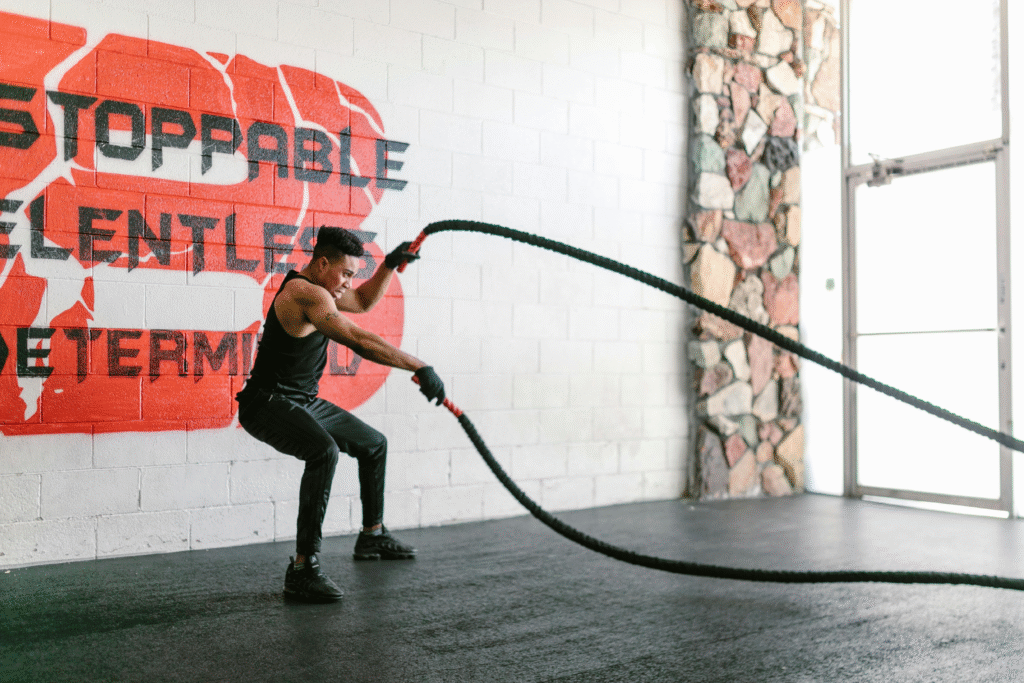
6. HIIT (High-Intensity Interval Training)
What it is: Alternating between short bursts of all-out effort and brief recovery periods.
Why it works: HIIT is arguably the most time-efficient fat-burning exercise method. It creates a massive EPOC effect , your metabolism stays elevated for 24–48 hours after the workout.
Calories burned: 400–600 per 30 minutes (plus significant afterburn).
Scientific benefit: A meta-analysis in the British Journal of Sports Medicine found HIIT reduced total body fat by 28.5% more than moderate-intensity continuous training.
Beginner tip: Try 20 seconds of work, 40 seconds of rest. Use low-impact movements like step-jacks and marching to begin.
Advanced tip: Tabata protocol , 20 seconds max effort, 10 seconds rest, 8 rounds per exercise.
Best duration: 20–30 minutes, 3 times per week.
7. Burpees
What it is: A compound bodyweight exercise combining a squat, push-up, and jump.
Why it works: Burpees engage every major muscle group and skyrocket heart rate in seconds. They’re one of the most calorie-dense bodyweight exercises available.
Calories burned: 10–15 calories per minute.
Beginner tip: Remove the push-up and the jump initially. Perform a “step-back burpee” until strength improves.
Advanced tip: Add a pull-up at the top or perform on a bosu ball for increased intensity.
Common mistake: Sacrificing form for speed. Keep your back flat during the push-up phase.
Best duration: 3–5 sets of 10–15 reps.
8. Mountain Climbers
What it is: A plank-based exercise where you drive alternating knees toward your chest rapidly.
Why it works: Combines core strengthening with cardiovascular conditioning. Your heart rate climbs quickly because of the speed and full-body engagement.
Calories burned: 8–12 calories per minute.
Beginner tip: Perform slowly at first, focusing on keeping hips level and core engaged.
Advanced tip: Perform with hands on sliders for increased core activation.

Best duration: 30–60 second intervals, 4–5 rounds.
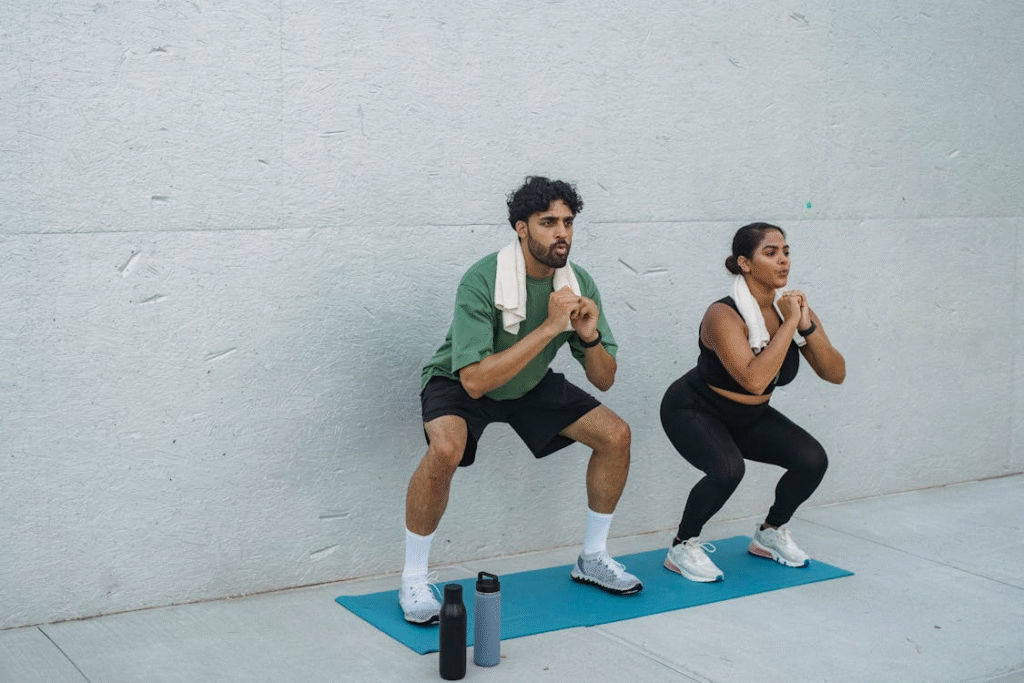
9. Squats
What it is: A lower-body strength exercise targeting the quadriceps, hamstrings, glutes, and core.
Why it works: Squats recruit the largest muscle groups in your body. More muscle recruitment = more calories burned. They also build the glutes and legs, increasing your resting metabolic rate.
Calories burned: 300–400 per hour of resistance training including squats.
Beginner tip: Master bodyweight squats before adding load. Focus on depth (thighs parallel to floor) and keeping knees tracking over toes.
Advanced tip: Barbell back squats, goblet squats, or jump squats for added intensity.
Common mistake: Letting the heels rise or knees collapse inward.
Best duration: 3–4 sets of 10–15 reps.
10. Lunges
What it is: A unilateral lower-body exercise targeting each leg independently.
Why it works: Because each leg works independently, lunges correct muscle imbalances and engage stabilizer muscles not activated in bilateral movements. More muscles = more calorie burn.
Beginner tip: Start with stationary lunges before progressing to walking or reverse lunges.
Advanced tip: Bulgarian split squats or weighted walking lunges for intensity.
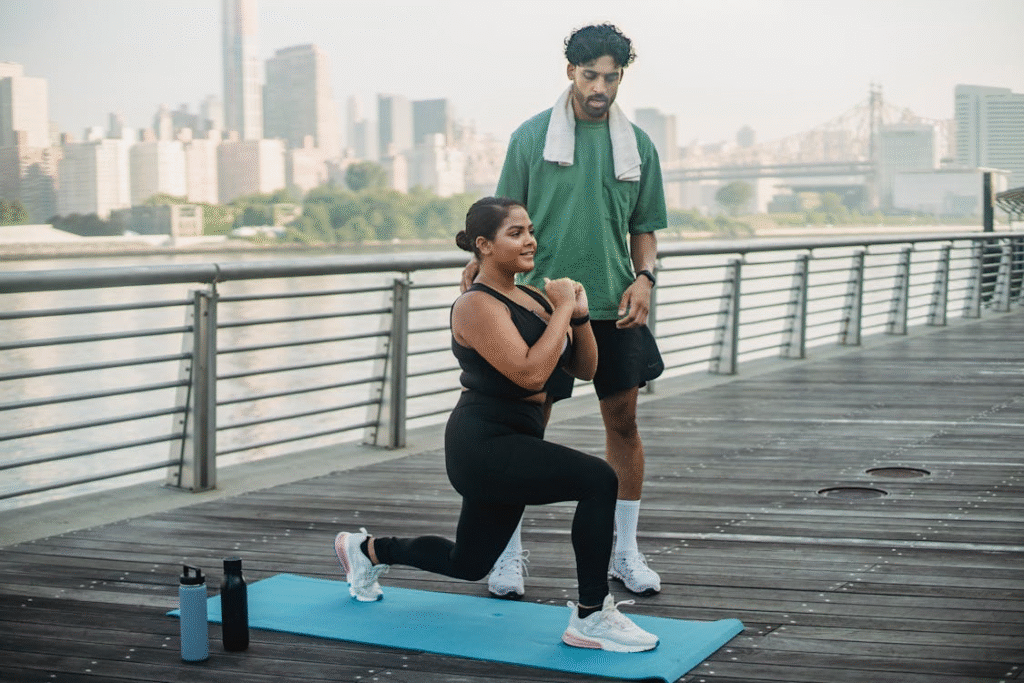
Best duration: 3 sets of 12–15 reps per leg.
11. Deadlifts
What it is: A fundamental compound lift targeting the posterior chain , hamstrings, glutes, back, and core.
Why it works: Deadlifts engage more muscle mass than almost any other exercise. This makes them one of the most powerful movements for building muscle and burning fat simultaneously.
Beginner tip: Start with Romanian deadlifts using light dumbbells to learn hip-hinge mechanics before loading a barbell.
Common mistake: Rounding the lower back. Always maintain a neutral spine.
Best duration: 3–4 sets of 6–10 reps.
12. Push-Ups
What it is: A compound upper body pressing movement targeting chest, shoulders, and triceps, with core stabilization.
Why it works: Push-ups are accessible, require no equipment, and when performed in high volumes or in circuit training, significantly elevate heart rate.
Beginner tip: Start with incline push-ups (hands elevated on a counter) and progress to floor push-ups.
Advanced tip: Explosive (clapping) push-ups, diamond push-ups, or archer push-ups.
Best duration: 3–5 sets to near failure.
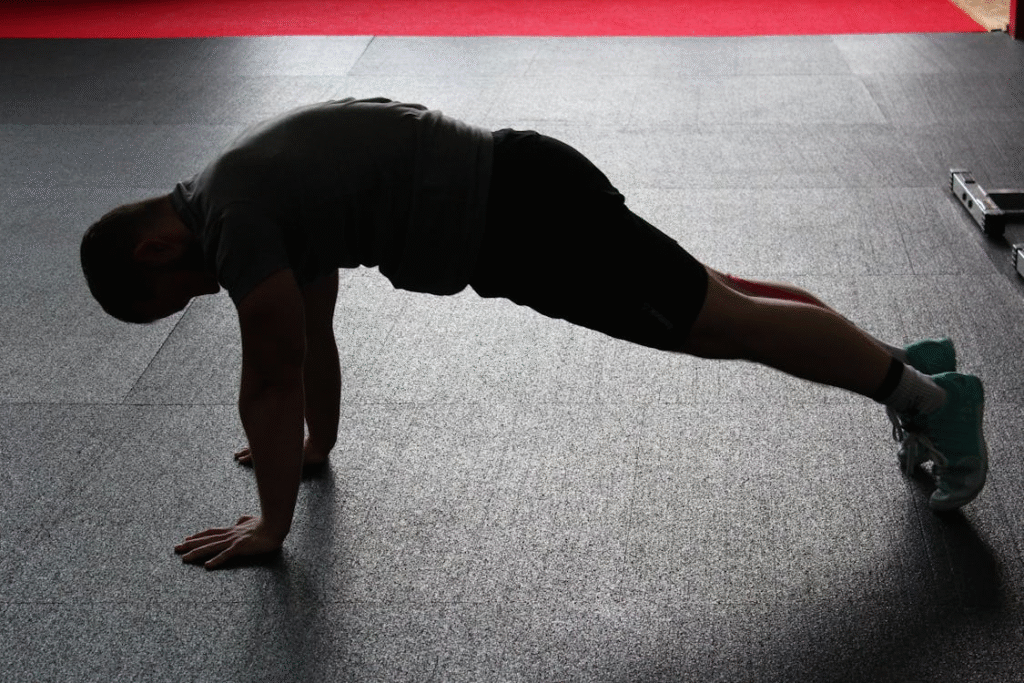
13. Planks
What it is: An isometric core exercise maintaining a rigid body position.
Why it works: Planks build core stability and endurance, which supports every other exercise you do. A strong core allows you to perform movements more efficiently and with less injury risk.
Beginner tip: Start with 20-second holds and progress by 5 seconds weekly.
Advanced tip: Side planks, plank rows, and plank to downward dog add complexity.
Best duration: 3 sets of 30–60 seconds.
14. Rowing (Machine )
What it is: A full-body aerobic and strength exercise using a rowing motion.
Why it works: Rowing engages legs (60%), core (20%), and upper body (20%), making it a remarkably complete exercise for calorie burning and muscle building simultaneously.
Calories burned: 400–600 per hour.
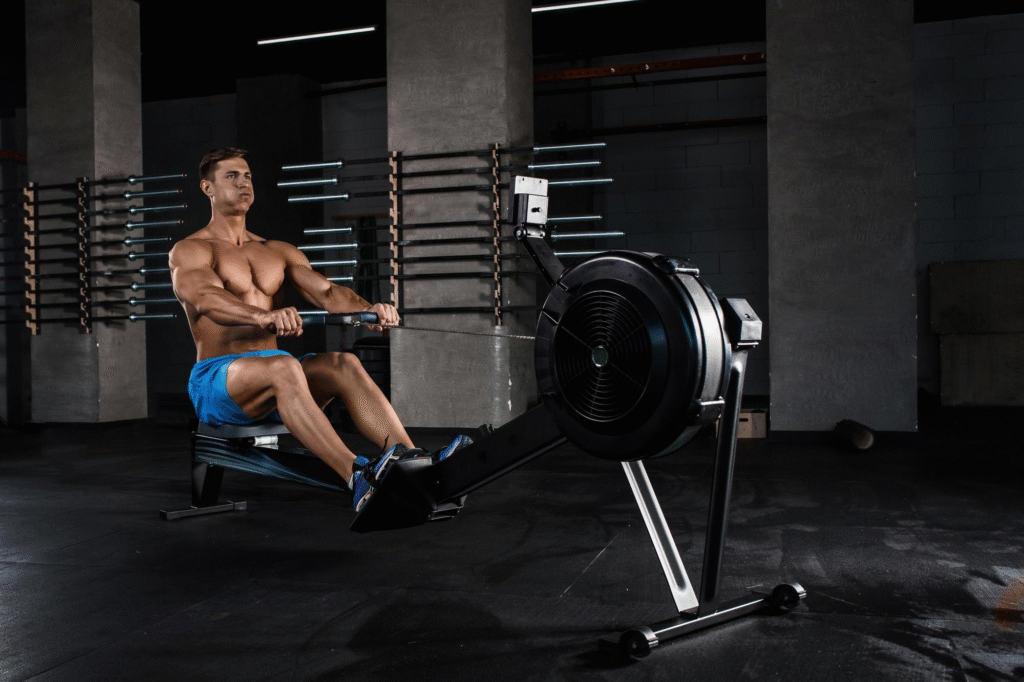
Best duration: 20–30 minutes of steady state or interval rowing.
15. Stair Climbing
What it is: Walking or running up stairs or a StairMaster machine.
Why it works: Climbing stairs requires significantly more energy than flat walking because you’re working against gravity. It targets the glutes and quads powerfully.
Calories burned: 450–600 per hour.
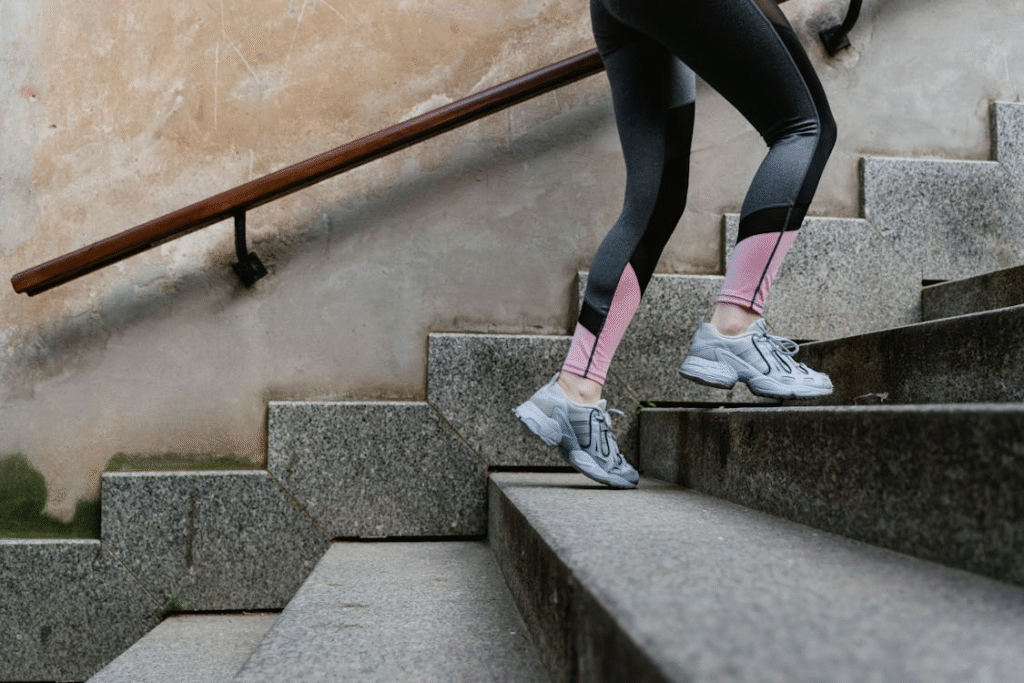
Best duration: 20–30 minutes, 4–5 times per week.
16. Dancing
What it is: Rhythmic movement to music, ranging from Zumba to ballroom.
Why it works: Dancing is exercise disguised as fun. Because it doesn’t feel like work, adherence is significantly higher , and consistency is the ultimate driver of weight loss results.
Calories burned: 300–500 per hour.

Best duration: 30–60 minutes per session.
17. Yoga
What it is: A practice combining postures, breathwork, and mindfulness.
Why it works for weight loss: While yoga burns fewer calories than cardio, it reduces cortisol (stress-related fat storage), improves sleep quality (essential for fat metabolism), and builds body awareness that supports healthier eating habits.
Calories burned: 200–350 per hour (more in Vinyasa or Power Yoga).

Best duration: 45–60 minutes, 3–5 times per week.
18. Pilates
What it is: Low-impact resistance exercise emphasizing core strength, posture, and controlled movement.
Why it works: Pilates builds lean muscle, particularly in the core, hips, and back. It creates the toned, functional physique many people seek and improves movement quality in other exercises.
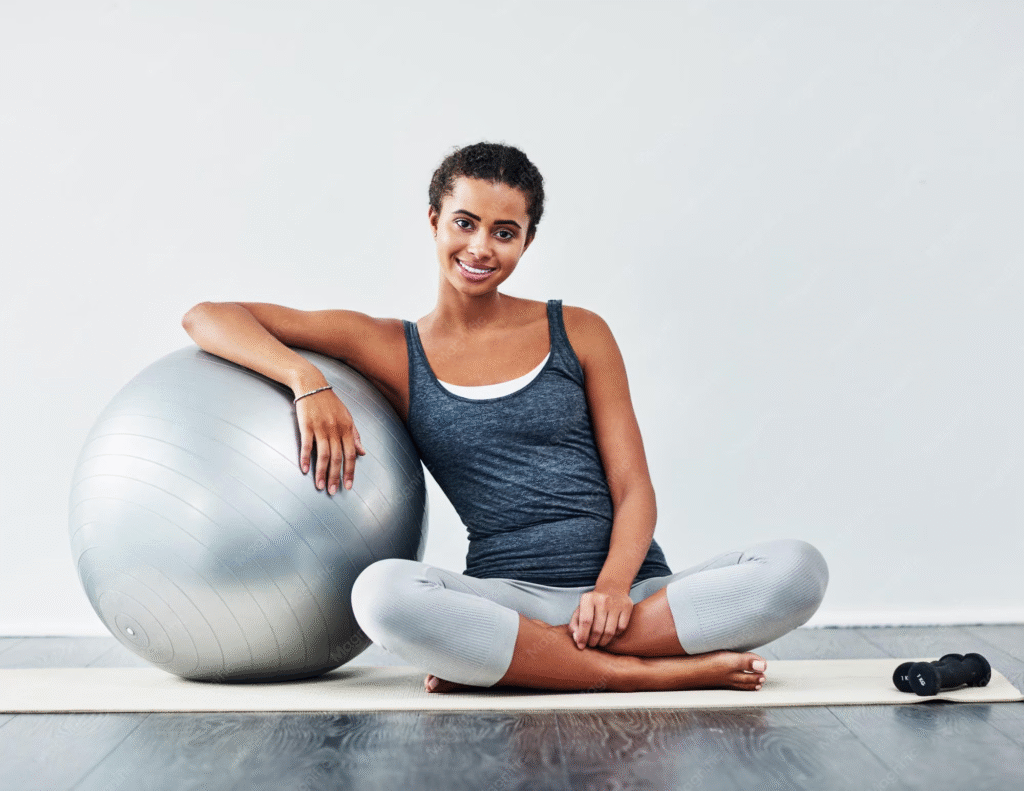
Best duration: 45–60 minutes, 3 times per week.

Get fit your way with FymbleApp! Book a daily gym pass instantly, access top gyms near you, and work out without long-term commitments.
Best Cardio Exercises for Weight Loss
What exercise burns the most fat? The answer depends on intensity, but here’s how the top cardio options stack up for fat burning:
The best cardio exercises for weight loss are those that simultaneously elevate your heart rate significantly and can be sustained for long enough to create meaningful calorie burn. HIIT leads in efficiency, while running, cycling, swimming, and jump rope are close behind.
Key cardio principle: Aim for 150–300 minutes of moderate-intensity cardio OR 75–150 minutes of vigorous cardio per week (per American Heart Association guidelines).
Zone 2 training , sustained effort at 60–70% of maximum heart rate , is particularly effective for fat oxidation, as this zone maximizes the proportion of fat burned as fuel.
The Fat-Burning Cardio Hierarchy (by calories burned per hour):
| Exercise | Calories/Hour (avg.) | Impact Level |
| Running (6 mph) | 600–800 | High |
| Jump Rope | 600–800 | High |
| Cycling (vigorous) | 500–700 | Low |
| Swimming | 450–700 | Very Low |
| Stair Climbing | 450–600 | Medium |
| HIIT | 400–600 | Variable |
| Dancing (Zumba) | 350–500 | Low-Medium |
| Walking (brisk) | 200–350 | Very Low |
Best Strength Training Exercises for Fat Loss
Strength training is the most underrated fat loss tool in existence. Many people , particularly women , avoid weights for fear of “bulking up.” This is a myth. Women have approximately 10–30 times less testosterone than men, making significant muscle bulk nearly impossible without pharmaceutical assistance.
Why strength training beats cardio for long-term fat loss:
- Builds muscle, which raises resting metabolism
- Creates EPOC (continued calorie burn post-workout)
- Improves body composition (lower fat %, higher muscle %)
- Strengthens bones and reduces injury risk
The best strength exercises for fat loss are compound movements , exercises that use multiple joints and muscle groups simultaneously:
- Deadlifts , Posterior chain powerhouse
- Squats , Full lower body + core
- Bench Press , Chest, shoulders, triceps
- Pull-Ups/Rows , Back and biceps
- Overhead Press , Shoulders + core stability
- Kettlebell Swings , Full body explosive strength-cardio hybrid
- Dumbbell Lunges , Unilateral leg strength
Programming for fat loss: Perform 3–4 strength sessions per week. Use moderate weights with 10–15 reps and 60–90 second rest periods to maintain elevated heart rate.
HIIT vs. Cardio for Weight Loss
This is one of the most debated questions in fitness. Here’s the honest, evidence-based answer:
HIIT wins for time efficiency. A 20-minute HIIT session burns comparable calories to a 40-minute steady-state cardio session when you account for afterburn (EPOC).
Steady-state cardio wins for volume and recovery. You can do moderate cardio more frequently without overtaxing your central nervous system. It’s also more suitable for beginners and those recovering from injury.
The verdict: Both work. The ideal approach is to combine them , 2 HIIT sessions and 2–3 moderate cardio sessions per week.
| Factor | HIIT | Steady-State Cardio |
| Time required | 20–30 min | 45–60 min |
| Calories during workout | High | Moderate |
| Afterburn (EPOC) | Very High (24–48 hrs) | Low-Moderate |
| Muscle preservation | Better | Moderate |
| Recovery time needed | 48 hrs | 24 hrs |
| Beginner-friendly | Less | More |
| Injury risk | Higher | Lower |
| Best for | Fat loss, time efficiency | Endurance, consistency |
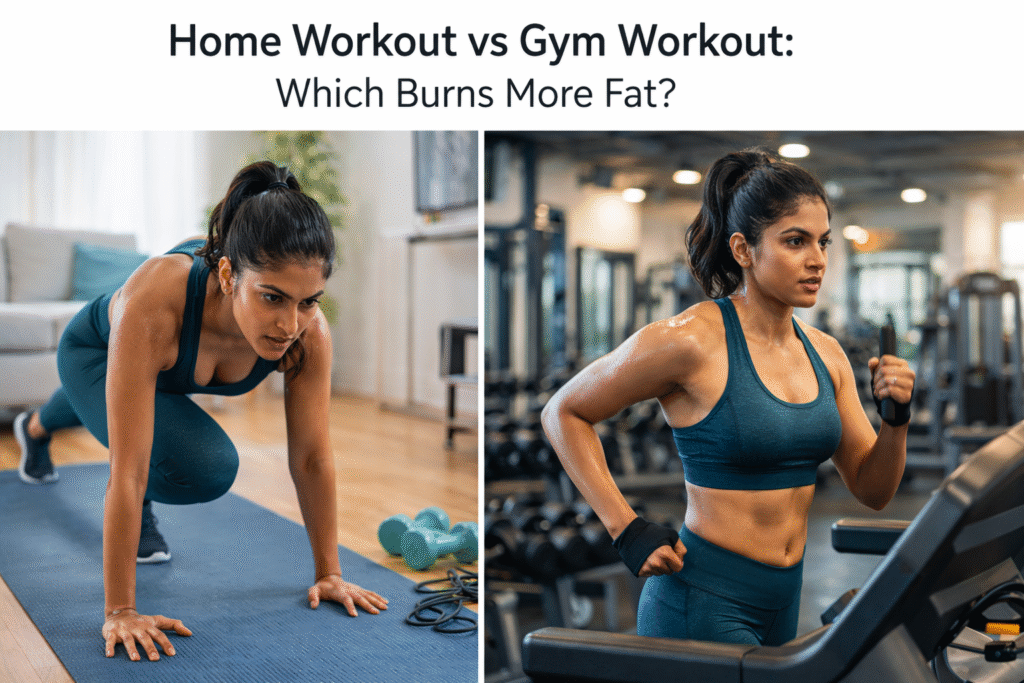
Best Home Workouts for Weight Loss
You don’t need a gym membership to lose significant amounts of fat. Some of the most effective fat-burning workouts can be done in a living room with zero equipment.
The best home workout for weight loss combines bodyweight strength exercises with cardiovascular movement, structured in circuits to keep heart rate elevated.
Sample Home Fat-Loss Circuit (No Equipment)
Perform each exercise for 40 seconds, rest 20 seconds. Complete 4 rounds.
- Jump squats
- Push-ups
- Mountain climbers
- Reverse lunges (alternating)
- Burpees
- Plank hold
- High knees
- Glute bridges
Total time: ~28 minutes Calories burned: ~250–350
Home workout tools worth investing in:
- Jump rope (99rs ): Doubles your calorie burn potential
- Resistance bands (499Rs): Adds strength training options
- A pair of dumbbells (999Rs ): Unlocks dozens of exercises
Best Gym Workouts for Weight Loss
The gym provides access to equipment that significantly expands your exercise options and allows progressive overload , the cornerstone of continuous improvement.
Best gym workout for weight loss: Push-Pull-Legs + Cardio Split
| Day | Focus |
| Monday | Push (Chest, Shoulders, Triceps) + 15 min HIIT |
| Tuesday | Cardio (30 min run or bike) |
| Wednesday | Pull (Back, Biceps) + Core |
| Thursday | Rest or yoga |
| Friday | Legs (Squats, Deadlifts, Lunges) |
| Saturday | Full body circuit or HIIT |
| Sunday | Active rest (walk, swim, stretch) |
Best gym equipment for fat loss:
- Barbell (compound lifts)
- Cable machine (versatile resistance)
- Rowing machine (full-body cardio)
- Treadmill / cycling bike
- Kettlebells (strength + cardio hybrid)
Also Read Suggested Blogs
Healthy Eating for Weight Loss
AI Fitness Coaching: The Feature of Workouts
Top 10 Affordable gyms near you in Bangalore
Best Exercises for Belly Fat Loss
Which exercise is best for belly fat?
There is no exercise that specifically “spot reduces” belly fat , this is a persistent myth. Fat loss happens systemically, and genetics determine where you lose it first. However, certain exercise strategies are most effective at reducing overall body fat and specifically visceral fat (the dangerous fat surrounding abdominal organs).
Most effective for belly fat:
- HIIT workouts , Multiple studies confirm HIIT reduces visceral abdominal fat more effectively than steady-state cardio.
- Strength training , Building muscle throughout the body raises metabolism and reduces overall fat percentage.
- Core exercises , Planks, dead bugs, hollow holds, and cable crunches build abdominal muscle, which becomes visible as fat is lost.
- Running and cycling , Sustained aerobic exercise reduces cortisol over time, addressing the hormonal driver of belly fat.
The belly fat truth: Nutrition accounts for approximately 80% of belly fat reduction. You cannot out-exercise a poor diet.
Weight Loss Workout Plan for Beginners
Starting from scratch can feel overwhelming. This beginner weight loss workout plan is intentionally simple, sustainable, and progressive.
Week 1–2: Foundation Phase
- 3 days/week: 30 minutes of brisk walking
- 2 days/week: Bodyweight circuit (20 min) , squats, push-ups (modified), lunges, planks
- Focus on consistency over intensity
Week 3–4: Build Phase
- 4 days/week: 35–40 min walking or light jogging intervals
- 2 days/week: Bodyweight circuit (25 min) with added mountain climbers and glute bridges
- Add 5 minutes of stretching after every session
Week 5–8: Progression Phase
- 3 days/week: 30 min moderate cardio (jog, cycle, or swim)
- 3 days/week: Beginner strength training with dumbbells or resistance bands
- Begin tracking calories with a free app
Beginner tip: Don’t change everything at once. Adding one healthy habit per week is far more sustainable than a complete lifestyle overhaul overnight.
Weekly Workout Routine for Fat Loss
Here is a balanced, evidence-based weekly routine for meaningful fat loss:
| Day | Workout | Duration |
| Monday | Strength Training (Upper Body) | 45 min |
| Tuesday | HIIT or Cardio | 25–30 min |
| Wednesday | Strength Training (Lower Body) | 45 min |
| Thursday | Active Recovery (Walk or Yoga) | 30–45 min |
| Friday | Full Body Strength + Core | 50 min |
| Saturday | Long Cardio (Run, Cycle, Swim) | 45–60 min |
| Sunday | Rest | , |
Weekly calorie burn target: 1,500–2,500 calories through exercise (combined with a 250–500 calorie daily dietary deficit for approximately 1–1.5 lbs of fat loss per week).
Common Exercise Mistakes That Prevent Weight Loss
Even the best intentions can be undermined by these surprisingly common errors:
1. Only doing cardio. Cardio burns calories but doesn’t build significant muscle. Without muscle, your metabolism stagnates. Add strength training.
2. Not eating enough protein. Protein preserves muscle during a calorie deficit and has the highest thermic effect of any macronutrient (your body burns 20–30% of protein calories just digesting it). Aim for 0.7–1g per pound of bodyweight.
3. Eating back exercise calories. Most fitness trackers overestimate calorie burn by 40–80%. Don’t use exercise as permission to overeat.
4. Skipping rest days. Recovery is where adaptation occurs. Overtraining raises cortisol, impairs sleep, and actually slows fat loss.
5. Doing the same workout every time. Progressive overload , gradually increasing weight, reps, or intensity , is required for continuous improvement.
6. Relying on the scale alone. Scale weight fluctuates daily due to water retention, glycogen, and hormonal shifts. Measure progress with body measurements, photos, and performance benchmarks too.
7. Not sleeping enough. Sleep deprivation increases ghrelin (hunger hormone), decreases leptin (satiety hormone), and directly impairs fat metabolism. Aim for 7–9 hours.
Nutrition Tips to Support Weight Loss Exercises
Exercise and nutrition are inseparable partners. Here’s how to fuel your workouts and accelerate fat loss:
Caloric deficit: Aim for 300–500 calories below your Total Daily Energy Expenditure (TDEE). This creates fat loss without the metabolic slowdown that comes from severe restriction.
Macronutrient priorities:
- Protein: 0.7–1g per lb of bodyweight (muscle preservation, satiety)
- Carbohydrates: Time around workouts for energy and recovery
- Fats: Don’t eliminate , healthy fats regulate hormones
Pre-workout: A small meal with complex carbs and protein 60–90 minutes before exercise (e.g., banana + Greek yogurt, or oats + eggs).
Post-workout: Protein within 30–60 minutes of training to support muscle repair (e.g., protein shake, chicken breast, cottage cheese).
Hydration: Even mild dehydration (2% body weight) impairs performance and metabolism. Drink 2–3 liters of water daily; more on workout days.
Fiber: 25–35g daily from vegetables, legumes, and whole grains , essential for appetite control and gut health.
Foods to minimize: Ultra-processed foods, refined sugar, liquid calories (alcohol, sweetened drinks), and excessive sodium (causes water retention that masks fat loss on the scale).
How Long Does It Take to See Weight Loss Results?
Honest answer: it depends , but here’s a realistic timeline:
| Timeframe | What to Expect |
| Week 1–2 | Water weight loss, improved energy, better sleep (scale may drop 2–5 lbs) |
| Week 3–4 | Initial fat loss begins, clothes start fitting differently |
| Week 6–8 | Visible changes in body composition, improved fitness performance |
| Month 3 | Significant fat loss noticeable to others (typically 8–15 lbs of actual fat) |
| Month 6 | Major body recomposition visible, sustainable habits established |
Sustainable rate: 0.5–1.5 lbs of actual fat loss per week. Anything faster risks muscle loss and metabolic adaptation.
The key insight: Most people quit right before results become visible. The physiological changes happening inside your body in the first 4–6 weeks are real , even when the mirror hasn’t caught up yet.
Best Time to Exercise for Weight Loss
Research suggests both morning and evening workouts are effective , but here’s the nuance:
Morning exercise:
- Fasted cardio (before breakfast) may enhance fat oxidation for some individuals
- Sets a positive behavioral tone for the day
- Fewer scheduling conflicts
- Shown to improve adherence long-term
Evening exercise:
- Body temperature and muscle strength peak in late afternoon (4–6 PM)
- Performance may be slightly better, supporting harder workouts
- Can be a stress-relief mechanism
The real answer: The best time to exercise is the time you’ll actually do it consistently. Adherence beats optimization every time.
Can You Lose Weight Without Exercise?
Yes , weight loss is technically possible through diet alone by creating a caloric deficit. However, exercise provides critical advantages that diet alone cannot:
- Prevents muscle loss during a caloric deficit
- Maintains higher metabolic rate (dieting alone can reduce RMR by 15–25%)
- Improves long-term weight maintenance (those who exercise are significantly more likely to keep weight off)
- Provides non-scale health benefits: cardiovascular health, mental health, insulin sensitivity, bone density
Is walking enough for weight loss? Yes , if paired with a modest caloric deficit. A daily 45-minute brisk walk burns approximately 250–350 calories and provides meaningful health benefits, especially for beginners.
Expert Tips for Sustainable Weight Loss
The fitness industry profits from complexity. Real fat loss is built on simple, consistent habits:
- Make it enjoyable. The best workout is the one you’ll keep doing. If you hate running, try cycling or dancing.
- Progress gradually. Increase workout duration or intensity by no more than 10% per week to minimize injury risk.
- Track non-scale victories. Stronger lifts, longer runs, better sleep, more energy , these are signs of real progress.
- Build a support system. People with a workout partner or community are significantly more likely to maintain exercise habits.
- Manage stress. Chronic stress directly promotes fat storage through cortisol. Exercise is one of the best stress management tools , use it.
- Be patient. Sustainable fat loss takes months. Bodies are not renovation projects with two-week turnarounds.
- Sleep is non-negotiable. No training program can compensate for chronic sleep deprivation. Prioritize 7–9 hours.
- Focus on health, not aesthetics. People who exercise for health and energy are significantly more consistent than those motivated purely by appearance.
Comparison Tables
Walking vs. Running for Weight Loss
| Factor | Walking | Running |
| Calorie burn/hour | 200–350 | 500–800 |
| Joint impact | Very Low | High |
| Beginner-friendly | Excellent | Moderate |
| Muscle engagement | Low-Moderate | Moderate-High |
| EPOC effect | Minimal | Moderate |
| Injury risk | Very Low | Moderate |
| Sustainability | Very High | Moderate |
Home Workout vs. Gym Workout
| Factor | Home Workout | Gym Workout |
| Cost | Free–Low | Monthly fee |
| Convenience | Very High | Moderate |
| Equipment variety | Limited | Extensive |
| Progressive overload | Harder | Easy |
| Social accountability | Low | Higher |
| Time efficiency | High | Moderate |
| Fat loss potential | High (with HIIT) | Very High |
Cardio vs. Strength Training for Weight Loss
| Factor | Cardio | Strength Training |
| Calories during workout | Higher | Lower-Moderate |
| Afterburn (EPOC) | Low | High (up to 38 hrs) |
| Muscle building | Minimal | Significant |
| Metabolism long-term | Neutral | Elevated |
| Injury risk | Low-Moderate | Low-Moderate |
| Beginner accessibility | High | Moderate |
| Best for | Calorie burn, heart health | Body composition, metabolism |
| Recommendation | Combine both for best results | Combine both for best results |
FAQ Section
1.What is the single best exercise for weight loss? There is no single “best” exercise , but HIIT
comes closest in terms of time efficiency and overall fat loss. The best exercise is the one you’ll perform consistently.
2: How much exercise per day is needed to lose weight?
Aim for at least 30 minutes of moderate-intensity exercise daily (150–300 minutes per week), ideally combining cardio and strength training.
3.Which workout burns the most calories?
Running, jump rope, and vigorous cycling burn the most calories per hour (600–800). HIIT burns slightly fewer during the session but dramatically more in the 24–48 hours following.
4.Can I lose weight with just walking?
Yes, particularly if combined with a modest caloric deficit. Brisk walking for 45–60 minutes daily can produce meaningful fat loss over time, especially for beginners.
5.How long should I exercise to lose weight?
Aim for 45–60 minutes per session, 4–5 times per week, combining cardio and strength training.
6: Is strength training or cardio better for weight loss?
For long-term fat loss and body composition, strength training has the edge due to its muscle-building and metabolic-boosting effects. Ideally, combine both.
7: What are the best exercises to lose belly fat specifically?
HIIT, running, strength training, and core exercises are most effective. Belly fat reduction requires a caloric deficit , no exercise “targets” belly fat specifically.
8: How many days per week should I work out to lose weight?
4–5 days per week is optimal , 3 strength training sessions and 2 cardio sessions with 2 rest/active recovery days.
9: Can I lose weight doing home workouts?
Absolutely. Bodyweight HIIT circuits, jump rope, and resistance band training can produce excellent fat loss results without any gym equipment.
10: What burns more fat , morning or evening exercise?
Both are effective. The best time is whichever you’ll maintain consistently over months.
11: Is 20 minutes of exercise enough to lose weight?
A 20-minute HIIT session can be highly effective. However, for optimal results, aim for 30–60 minutes per session.
12: What role does diet play alongside exercise?
Nutrition accounts for approximately 70–80% of fat loss results. Exercise without dietary awareness produces limited results.
13: Why am I not losing weight despite exercising?
Common reasons: eating back exercise calories, insufficient protein, poor sleep, too much cardio (muscle loss), excessive stress, or unrealistic timelines.
14: Is yoga good for weight loss?
Yoga alone burns relatively few calories. However, it reduces stress, improves sleep, and builds core strength , all of which support fat loss indirectly. Best combined with higher-intensity exercise.
15: How long until I see results from exercising?
Physical changes typically become visible at weeks 6–8, with significant results by month 3. Non-scale improvements (energy, sleep, strength) occur within 2 weeks.
16: Is HIIT safe for beginners?
Beginners should start with modified HIIT , lower-intensity movements, longer rest periods (40-second rest for every 20 seconds of work), and no jumping initially.
17: What is the fastest way to lose weight naturally through exercise?
Combine HIIT (3x/week) with strength training (3x/week), maintain a moderate caloric deficit (300–500 cal/day), optimize protein intake, and prioritize sleep.
18: How important is rest between workout days?
Critical. Muscles grow and fat adaptation occurs during recovery, not during workouts. At least 1–2 full rest days per week are essential.
19: Can older adults exercise for weight loss?
Absolutely. Low-impact options like walking, swimming, cycling, and resistance band training are highly effective and appropriate for older adults. Always consult a physician before starting.
20: What’s the role of step count in weight loss?
Targeting 8,000–10,000 steps daily significantly increases NEAT (Non-Exercise Activity Thermogenesis) , the calories burned through incidental movement , which can add 200–400 calories to daily expenditure.
Conclusion
Weight loss is not a sprint. It’s one of the most personal, layered journeys a person can take , and it deserves a thoughtful, sustainable approach.
The best exercises for weight loss are those that challenge your cardiovascular system, build lean muscle, and fit into your actual life. Running, HIIT, strength training, cycling, swimming , all of them work. The common thread isn’t the exercise itself. It’s consistency, progressive effort, and the patience to trust a process that unfolds over months, not days.
Start where you are. Walk before you run. Modify before you quit. Every workout, however imperfect, is a deposit in the account of a healthier future.
Remember: the goal isn’t perfection. It’s momentum. And the only workout that doesn’t work is the one you never do.